Your quote funnel was built for linear journeys.
Your next customer will zig-zag.
AI is moving the starting line for insurance. The question is no longer whether a buyer reaches your site. It is whether your product can travel with them across the journey.
The insurance funnel has always been a little too pleased with itself.
Buy traffic. Improve the landing page. Reduce form drop-off. Get the customer to a quote. Get them to bind. Measure the whole thing as if the journey began on your domain and ended on your confirmation page.
That model worked well enough when the customer had to do the searching, the comparing, the remembering, and the follow-up. It worked even better when they got tired halfway through and accepted the first reasonable option.
That is changing.
The Mills Review says that by 2030 many financial consumer journeys may start with AI. The customer may begin with an agent that helps interpret a need, compares the market, and acts within agreed limits. Search is not disappearing. It is becoming the raw material for something more active.
The shift is already visible in retail. Adobe found that traffic to US retail sites from generative AI sources rose 4,700% year over year in July 2025. Target now says AI-driven traffic to its own site rose 2,000% in the first quarter of 2026, while its shopping experiences expanded across ChatGPT, Gemini, and Microsoft Copilot.
This is the part that should make insurance teams sit up: the buyer may form intent before the carrier ever gets a chance to explain itself.
The straight line is gone
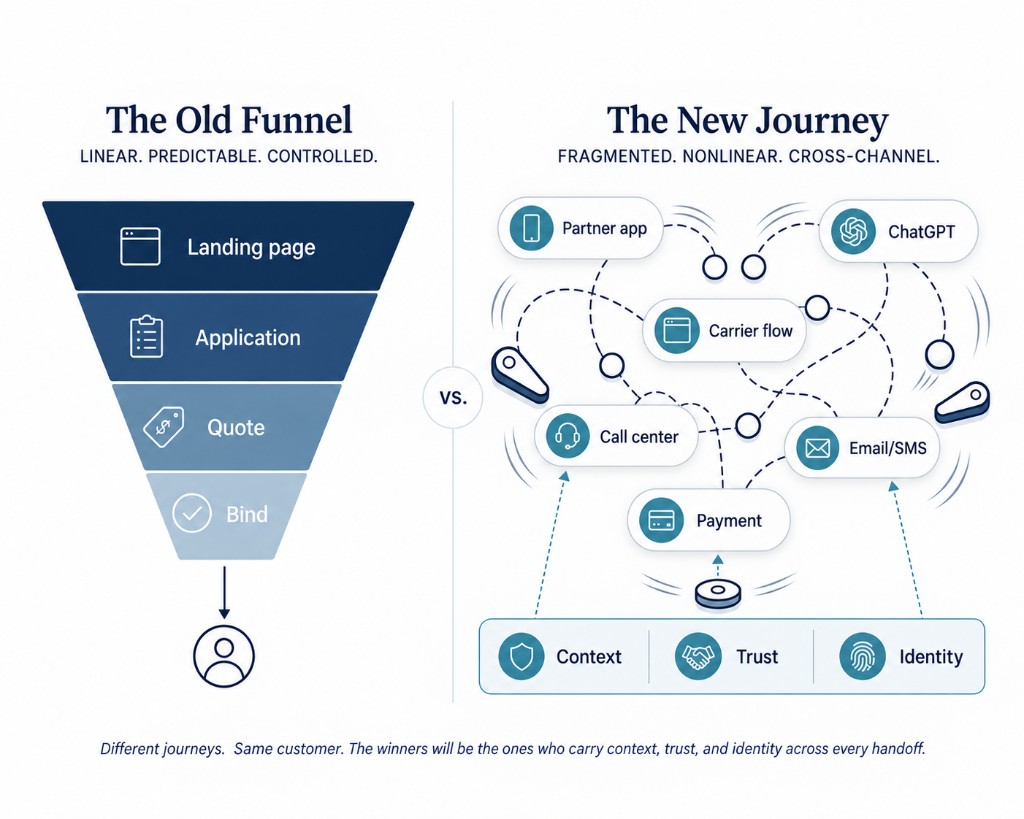
A customer might ask ChatGPT what kind of coverage makes sense. They might compare two options in conversation. They might open a structured quote experience, call a licensed agent for reassurance, and return later through a payment link. They might decide the product is right but the channel is wrong, at least for that moment.
The journey is not broken because it moved. It is broken when the context disappears every time it moves.
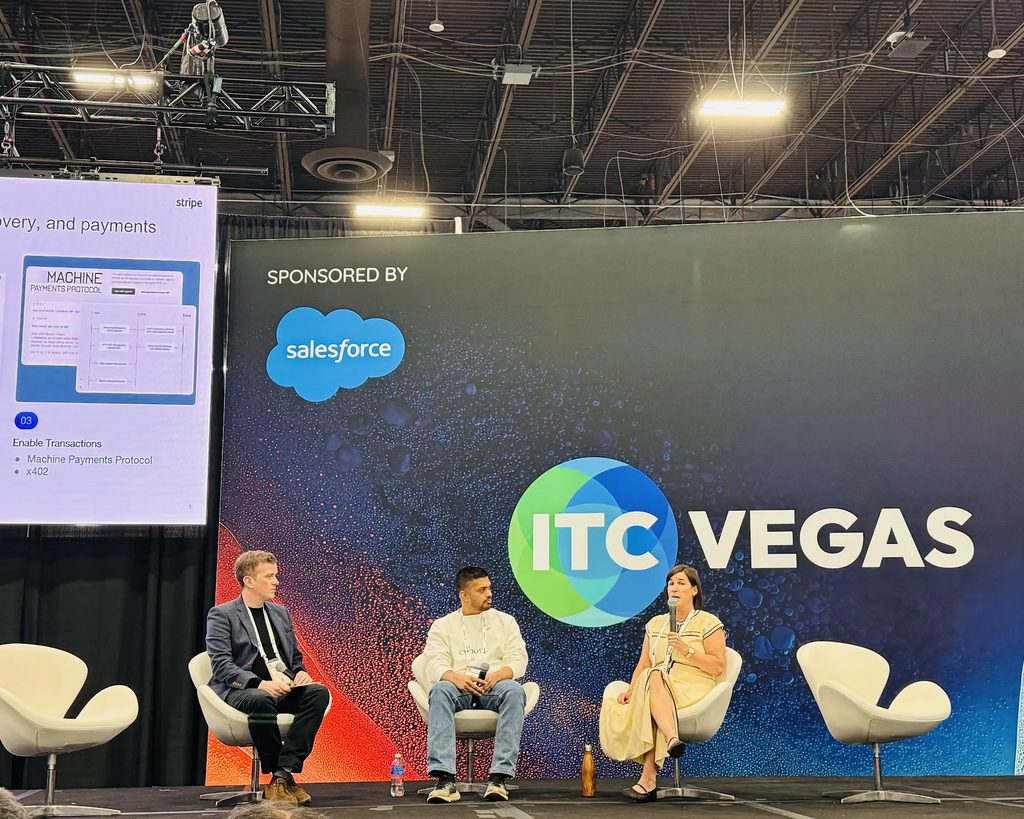
At Insurtech Insights NYC, Fletch convened a panel with Stripe, Profound, USAA, and Faye Travel Insurance around the question of how customers find and buy insurance when an AI assistant sits between them and the product. The throughline was simple: discovery, product presentation, payment, compliance, and handoff can no longer be treated as separate channel projects.
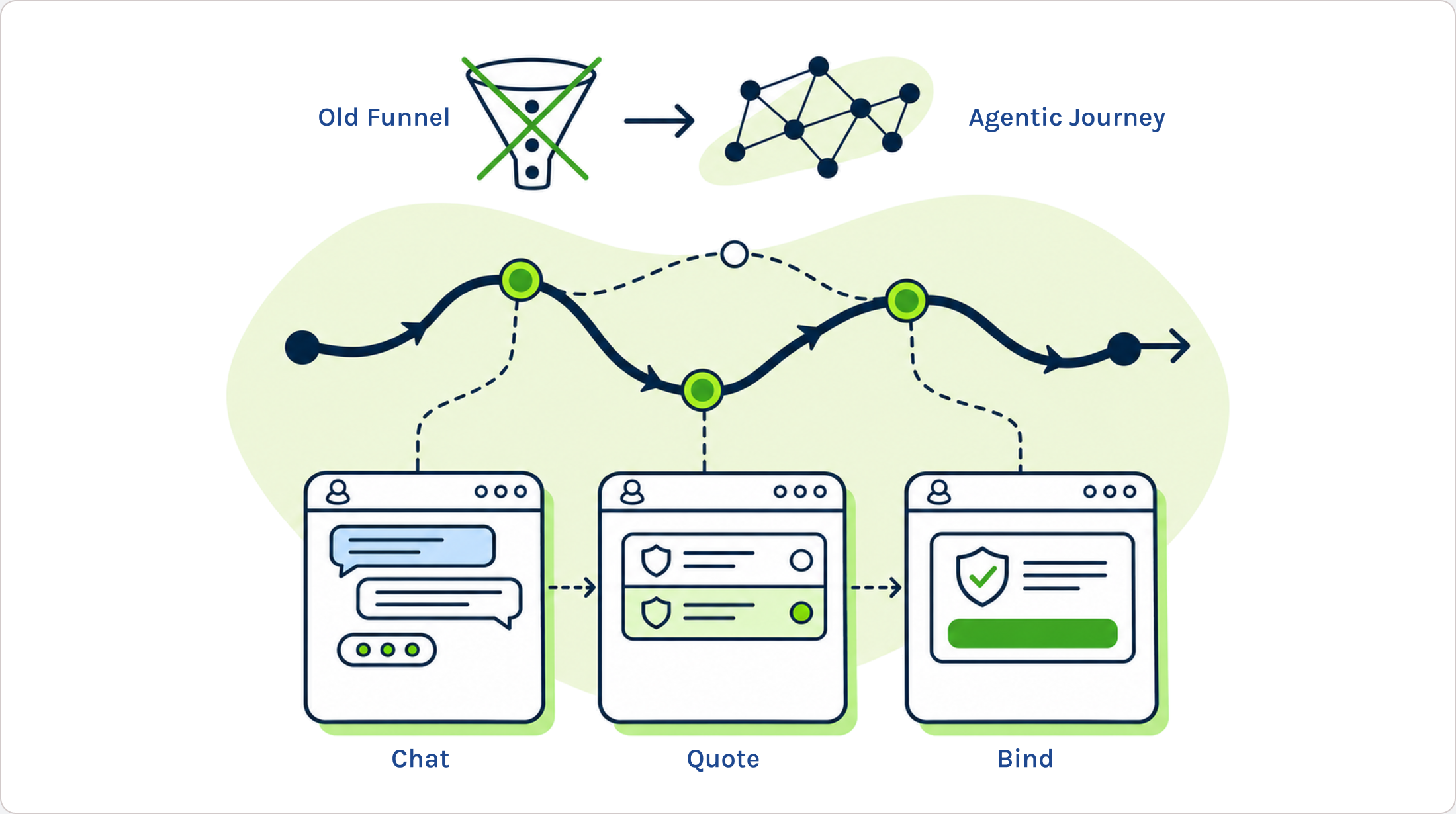
That is what makes this different from another chatbot initiative. A chatbot answers. An agentic journey has to understand, compare, route, authorize, and leave a usable record behind.
Retail is showing the direction
Walmart is building Sparky to synthesize reviews, make occasion-based recommendations, compare options, and help customers move toward a purchase. Target is pushing conversational shopping across multiple AI surfaces and allowing customers to build multi-item baskets. Accenture’s research describes the new market plainly: brands now have two audiences, the person and the AI agent acting on that person’s behalf.
Retail can move quickly because the object being sold is usually a product with a catalog description, a price, an inventory state, and a checkout path. Insurance has more moving parts. A quote is not a product card. Eligibility is not a recommendation badge. A bind is not just a completed cart.
Still, retail gives us the directional signal. The customer is going to expect the same continuity everywhere: ask once, compare clearly, know what happens next, and do not restart the journey because the surface changed.
Fletch has already crossed the line from demo to transaction
In October 2025, Fletch completed what Insurance Innovation Reporter described as the first known insurance policy purchase executed entirely by an agentic AI system in a controlled production environment.
That matters because it was not a mock shopping flow. The transaction used AI to guide coverage choices, process payment, and complete policy binding. OpenAI models helped with the agentic experience. Stripe tokenized the payment credentials. The transaction happened with consumer consent and licensed producer oversight.
The important lesson is not that every insurance purchase should happen in chat. It is that chat, web, phone, payment, and bind can be parts of one transaction when the infrastructure carries the context across them.
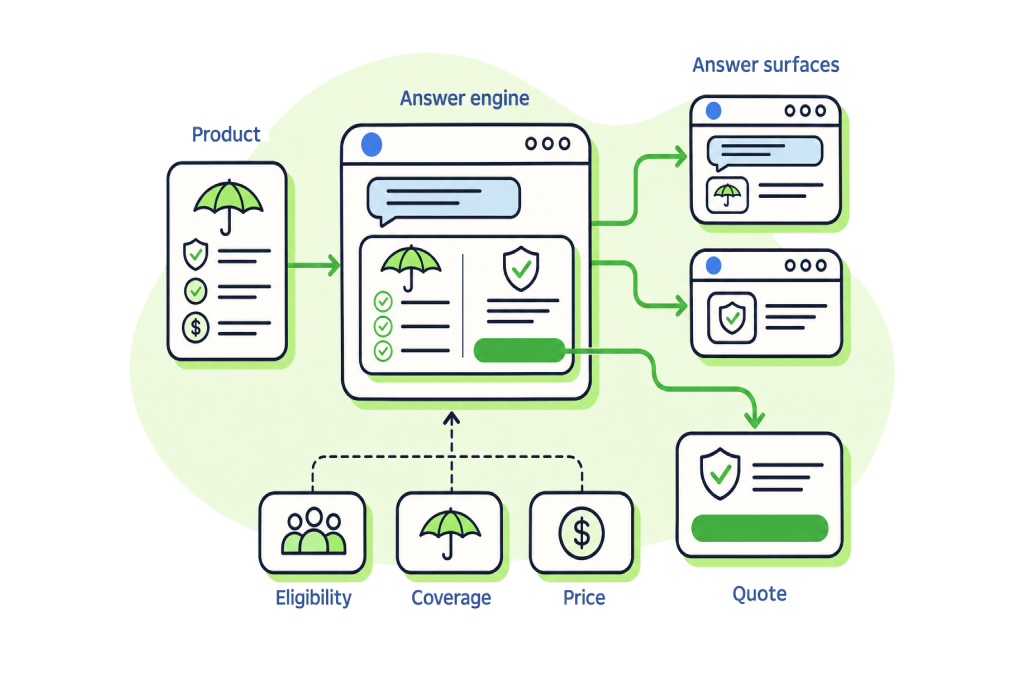
The Fletch platform is designed around that idea: control which products surface, how they are presented, which disclosures appear, when to route to a licensed human, and how to measure the path from agent conversation to bound policy.
What carriers should change now
Start by accepting that your website is not necessarily the front door. Then ask a harder question: if an AI agent introduces your product, what does it need to know in order to represent it accurately and move the customer forward responsibly?
That means making availability, eligibility, coverage, price, exclusions, disclosures, and next steps legible to the systems that will carry the conversation. It means designing handoffs that preserve the customer’s answers and the carrier’s evidence. It means measuring the full journey instead of awarding all the credit to the first click or the last bind.
The old funnel is not dead. It is just no longer the whole funnel.
Your next customer will zig-zag. The carriers that win will make that feel intentional.
Sources
The links below are the external references used in this article. Fletch-specific claims are identified as first-party or trade-press sources.
- The Mills Review: AI and the future of retail financial services - FCA; 2025
- Generative AI-powered shopping rises with traffic to retail sites - Adobe; August 2025
- How Target is shaping shopping experiences in conversational AI - Target; June 2026
- Inside Walmart’s strategy for building an agentic future - Walmart; May 2025
- Agentic commerce: Make your brand unmissable - Accenture; April 2026
- Fletch enables first agentic AI insurance policy purchase - Insurance Innovation Reporter; October 2025
- Agentic Commerce - Fletch; 2026
- Agentic Commerce in Insurance: Meeting Customers Where They Search - Insurtech Insights panel recap; 2026