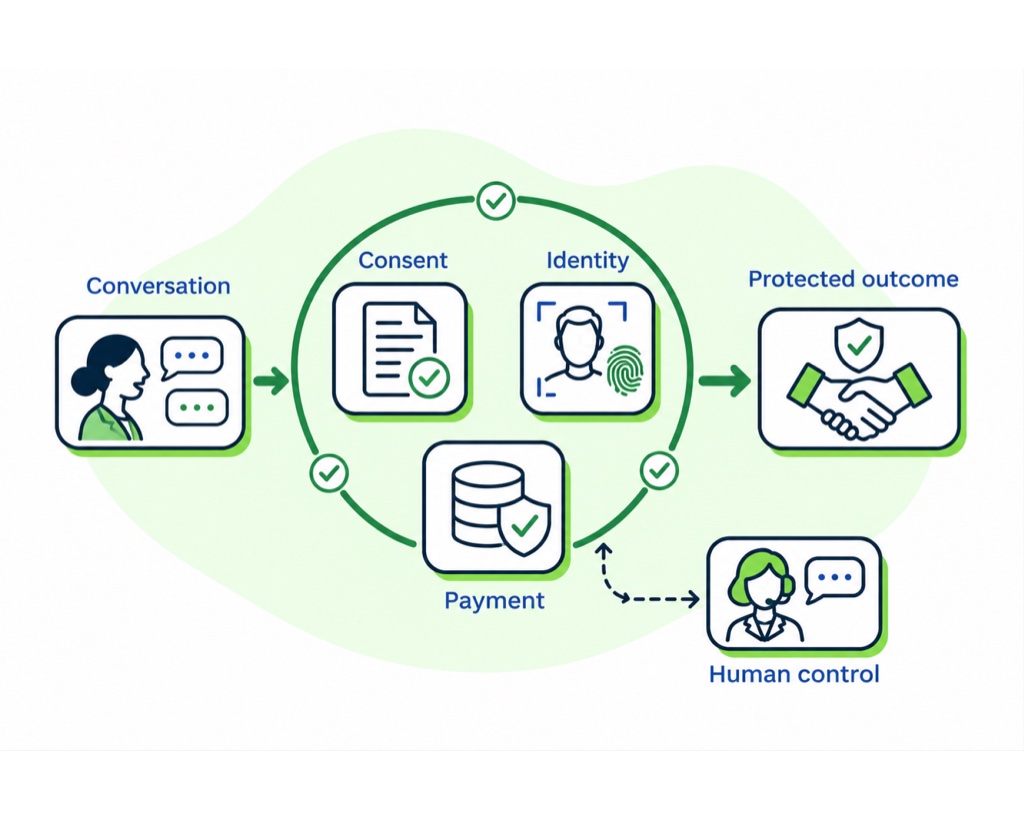
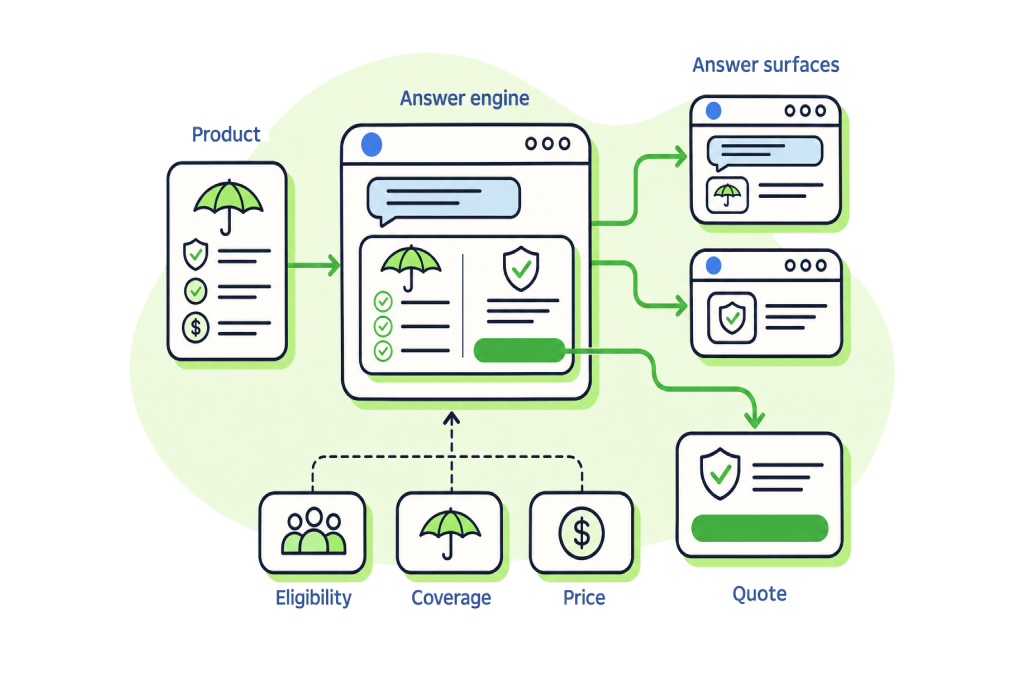
Insurance does not have a product detail page. It has a regulated decision path.
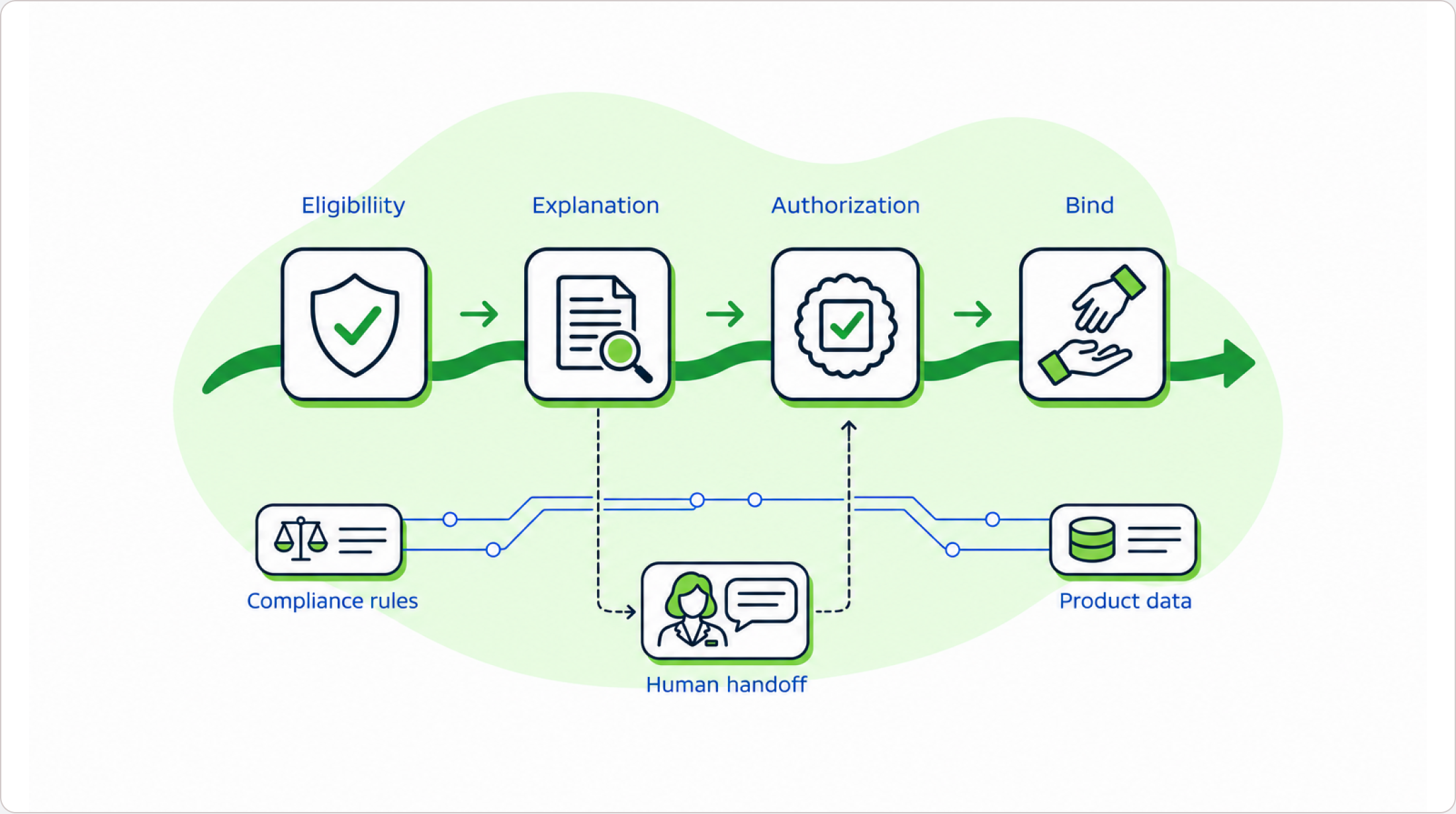
Retail has a product page. Insurance has eligibility, quote logic, disclosures, payment, bind, and sometimes a licensed human. That distinction is the whole point.
The fastest way to misunderstand agentic insurance is to copy retail too literally.
In retail, the product detail page does a lot of work. It shows the thing, the price, the variants, the reviews, the delivery promise, and the button that starts checkout. The path is not always simple, but the object being bought is usually stable enough to put on a page.
Insurance is a different kind of object.
It is a risk transfer decision shaped by eligibility, coverage, exclusions, limits, deductibles, jurisdiction, underwriting, disclosures, payment, and the consumer’s right to understand what they are agreeing to. Sometimes it also involves a licensed person. Calling that a product page is convenient. It is not accurate.
The retail analogy breaks at the moment of consequence
Target can let a customer ask for a gift, build a multi-item basket, and choose shipping or pickup. Walmart can use Sparky to synthesize reviews and recommend products. Those are meaningful examples of conversational commerce, and they are useful because they show where the interface is going.
But insurance cannot stop at recommendation. The question is not just ‘which option looks best?’ It is also ‘is this person eligible, what exactly is covered, which exclusions matter, what has been disclosed, who is allowed to solicit or negotiate the product, and what happens if something goes wrong?’
The NAIC’s producer licensing guidance is a useful reminder that insurance activity can involve selling, soliciting, or negotiating. The agentic interface does not erase that underlying activity. It changes the surface where the activity occurs.
That is why the right mental model is not an AI product page. It is a regulated decision path.
What the path has to represent
An agent-ready insurance journey needs a richer object than title, price, and image. It needs to represent availability, eligibility, coverage, exclusions, limits, deductibles, rate inputs, jurisdiction, disclosure requirements, consent, payment, bind status, servicing options, and human escalation.
It also needs to tell the agent what not to do. Do not imply coverage. Do not compare products using incomplete attributes. Do not skip a disclosure because the conversation is moving quickly. Do not take payment until the user has authorized the right transaction. Do not treat a quote as a bound policy.
This is not theoretical. In October 2025, Fletch completed what Insurance Innovation Reporter described as the first known insurance policy purchase executed entirely by an agentic AI system in a controlled production environment. The transaction used AI to guide coverage choices, process payment, and complete policy binding, with consumer consent and licensed producer oversight
That is a very different achievement from making a policy PDF available to a chatbot.
The protocol is only the beginning
OpenAI’s Agentic Commerce Protocol and Stripe’s agentic commerce work show the industry building the language and payment primitives for agents and merchants to work together. The protocol can help an agent discover an offer, pass information, and complete a transaction with explicit controls.
But a protocol does not decide whether a consumer should be shown a product in the first place. It does not know your state-specific availability rules. It does not replace your disclosure logic, your underwriting guardrails, your producer licensing model, or your handoff policy.
The payment rail is necessary. It is not the decision path.
This is the distinction a lot of agentic commerce commentary skips. The future will not be won by the company that merely connects a payment token to a conversational interface. It will be won by the companies that make the full journey reliable, inspectable, and usable.
What Fletch is actually solving
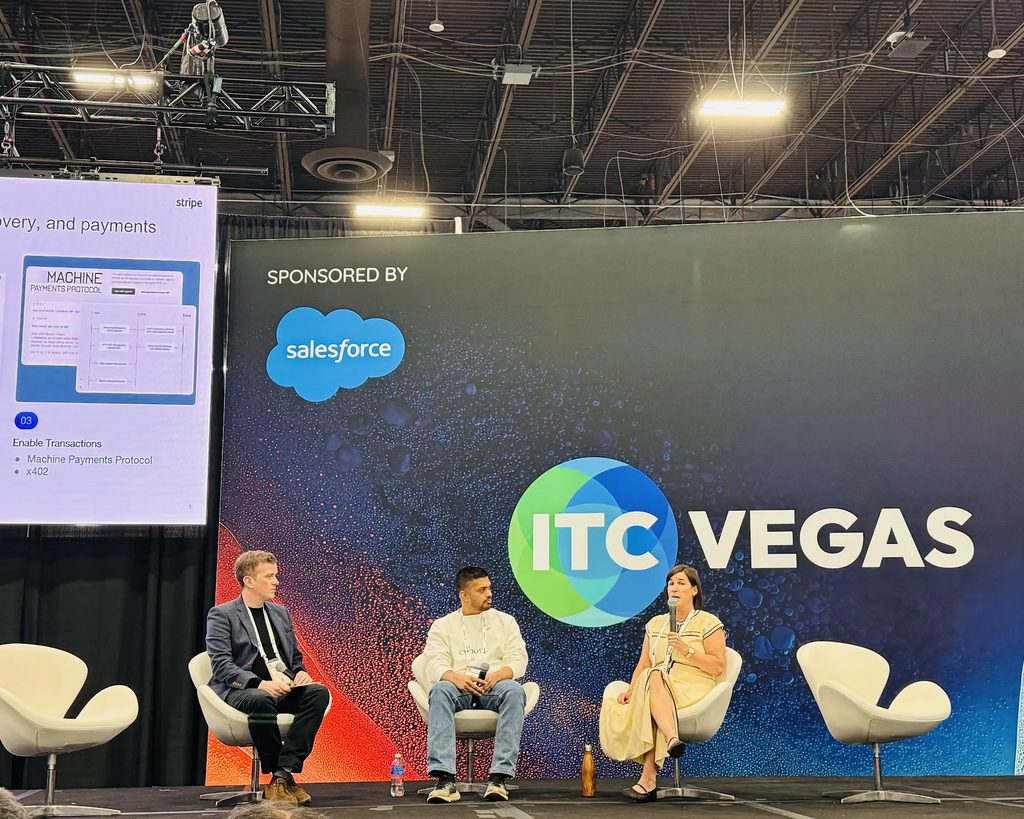
At Insurtech Insights NYC, Fletch brought together Stripe, Profound, USAA, and Faye Travel Insurance to discuss what changes when customers find insurance through AI surfaces. One of the most useful distinctions from that conversation was between the front door and the actual buying system.
Chat may be the front door. It is not necessarily where every decision should happen. Quote comparison may need structured UI. Payment may need a secure component. A complex coverage question may require a licensed human. The customer might start in chat and finish somewhere else without that being a failure.
The Fletch platform is built around those choices. Carriers can control what surfaces, how it is presented, which disclosures are included, when to route to a human, and how context follows the buyer across chat, web, and agent handoff.
That is why Fletch is better understood as a transaction layer for agentic insurance than as another chatbot tool.
The right question for carriers
Do not ask whether your insurance product can be placed in ChatGPT. Ask whether the product can survive being interpreted, compared, quoted, paid for, bound, and serviced across surfaces you do not fully control.
If the answer is no, start with the object. Normalize the product data. Make the rules explicit. Separate education from advice. Define the authorization points. Make disclosures machine-readable and consumer-visible. Create a handoff artifact that a licensed person can trust. Track what the agent saw, what the customer confirmed, and what the system did.
Retail has already taught consumers to expect convenience. Insurance now has to deliver convenience without becoming simplistic.
That is the real design challenge. Make the journey feel as easy as retail, while keeping the substance of insurance intact.
Sources
The links below are the external references used in this article. Fletch-specific claims are identified as first-party or trade-press sources.
- Insurance Topics: Producer Licensing - NAIC; 2026
- Buy it in ChatGPT: Instant Checkout and the Agentic Commerce Protocol - OpenAI; 2025
- What is agentic commerce? A guide to getting started - Stripe; 2025
- Fletch enables first agentic AI insurance policy purchase - Insurance Innovation Reporter; October 2025
- Agentic Commerce - Fletch; 2026
- How Target is shaping shopping experiences in conversational AI - Target; June 2026
- The Future of Shopping Is Agentic. Meet Sparky. - Walmart; June 2025
- The Mills Review: AI and the future of retail financial services - FCA; 2025
- Agentic Commerce in Insurance: Meeting Customers Where They Search - Insurtech Insights panel recap; 2026