The click was never the customer.
What Angi’s Sponsored Agent pilot with ChatGPT says about advertising when the customer arrives with a problem, not a keyword.
I have spent enough time around lead generation businesses to know how much we worship the click. It is easy to count, easy to put in a dashboard, and easy to explain in a meeting. Someone saw an ad, someone clicked, and the spreadsheet has one more thing to celebrate.
The trouble is that a click tells you almost nothing about the problem the person is trying to solve.
A homeowner searching for roof repair might have water coming through the ceiling. They might be planning a remodel. They might be trying to work out whether the stain in the hallway is a $200 problem or a $20,000 problem. The click looks exactly the same in each case.
Then the person lands on a form and has to explain everything again. A minor annoyance if you are buying socks. Less charming when you are trying to describe a leak at 11:30 at night.
That is why OpenAI’s Sponsored Agent announcement caught my attention.
A better place for the click
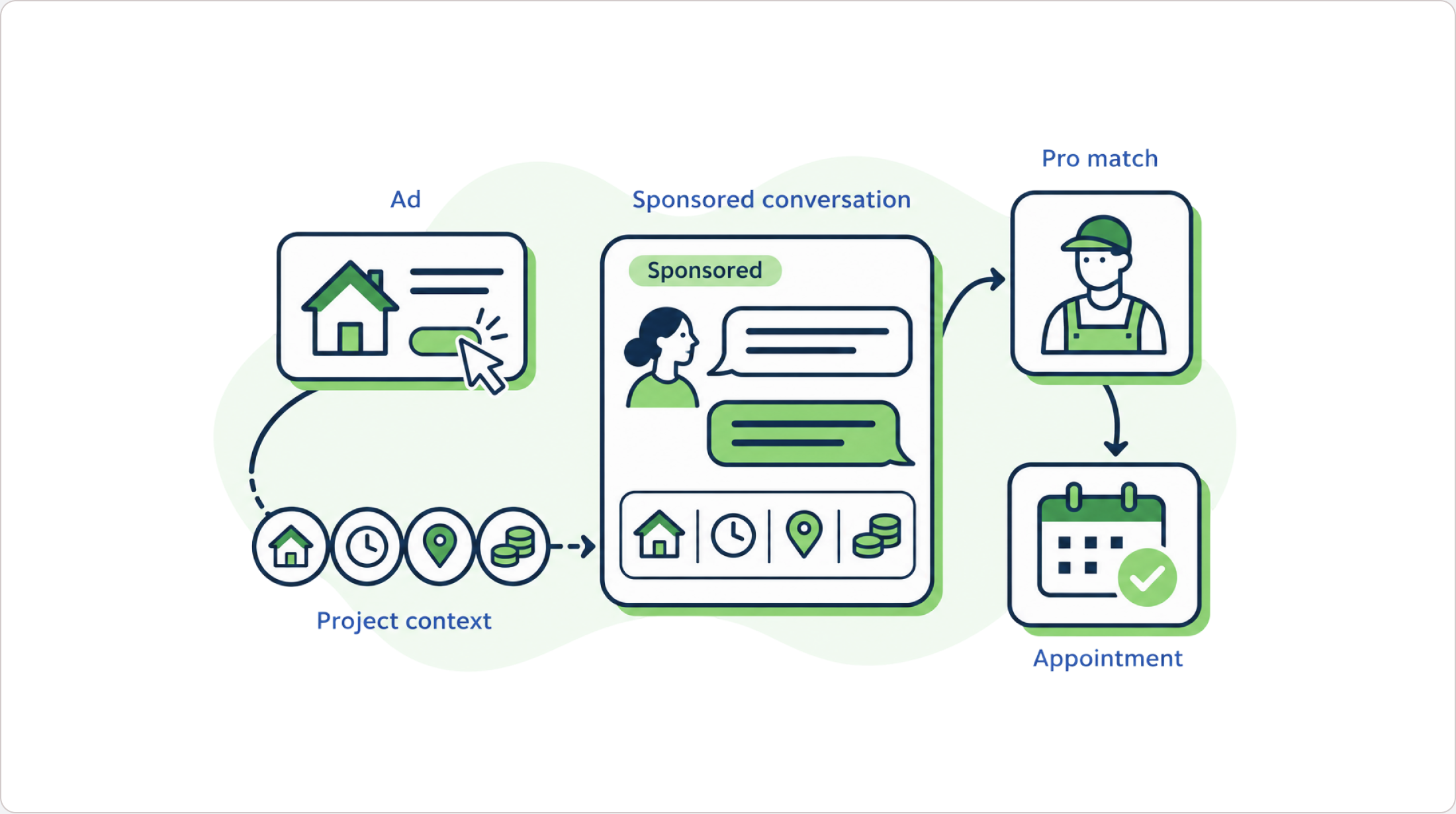
OpenAI is testing a format where someone who sees an ad in ChatGPT can open a clearly labeled conversation with an agent sponsored by the business. They can ask questions, explain what they are looking for, and go to the company’s website when they are ready.
The interesting part is not that the ad opens a chat window. We have been putting chat windows on websites for years. The interesting part is that the person can explain the problem before the business asks them to become a lead.
The test is currently limited to selected advertisers in a limited alpha, according to OpenAI’s help documentation. The sponsored conversation is separate from ChatGPT’s independent answer and from the user’s original conversation. That seems like the right line to draw. It should be obvious when a business has entered the conversation. Nobody needs a sponsored agent pretending to be a friend.
Once the user chooses to continue, though, the business has a chance to ask a few useful questions before it asks for a lead.
Angi is a good early test
Home services make the point quickly. People do not usually wake up and search for a perfectly named product. They say the basement smells damp. The furnace is making a noise. The deck needs to be ready before a party. The kitchen is fine except for the thing that is definitely not fine.
Angi says its sponsored agent may appear in relevant home-services conversations. A homeowner can explain the project and then enter Angi’s service-request flow when it is time to bring in a pro.
This is not coming out of nowhere. In March, Angi launched an app in ChatGPT that takes a homeowner from a question to project scoping and a pro match. Angi says its AI Helper turns a homeowner’s plain-English description into a service request that a pro can work with. It also reports that AI Helper users were three times more likely to request a quote than traditional browsing users, and 25% more likely to say the project was completed successfully. Those are Angi’s numbers, not an independent study, but the underlying idea is pretty straightforward: a homeowner who can explain the job is more useful than one who clicked a banner because it looked interesting.
For Angi, the ad is starting to do more than buy a visit. It can help figure out what the job is before the job goes into the marketplace.
The hard part starts after the ad
Most banners are built to win the next three seconds. That made sense when the advertiser’s job ended at the click. In this format, the ad has to give someone a reason to keep talking, and the agent has to know enough to be useful once they do.
That means service categories, geography, availability, pricing logic, qualifications, exclusions, and what happens next. A better-looking banner cannot fix a marketplace that does not know what its own pros can do.
The handoff also cannot wipe the slate clean. If the homeowner already explained the leak, the urgency, the address, and the budget, the next system should not greet them with a blank form and ‘Tell us about your project.’
The measurement has to move with it. The click tells you someone chose to continue. It does not tell you whether the project was understood, whether the right pro responded, whether an appointment was booked, or whether the job was won.
Angi’s Q1 2026 shareholder letter is unusually blunt about this. The company talks about helping pros win appointments and jobs, with possible pricing based on a lead, an appointment, or a job won. That is a better description of value than ‘we generated a click.’
This is the uncomfortable bit for every lead marketplace. AI is doing more of the searching before a customer ever reaches the marketplace. If the marketplace only sells the referral, someone else can own the recommendation, the comparison, or the first answer.
The marketplace needs to be useful around that moment too: understand the need, make the options legible, route the request, and keep the context. Otherwise it is mostly selling the privilege of starting the same conversation over again.
The Sponsored Agent is still an early test. It needs accurate data, a trustworthy brand, a real path to action, and a very clear sponsored label. But it is a useful example of an ad moving from ‘click here’ to ‘let’s work out whether we can help.’
Insurance will run into this too
Home services and insurance have the same awkward feature: customers often know what happened before they know what product they need.
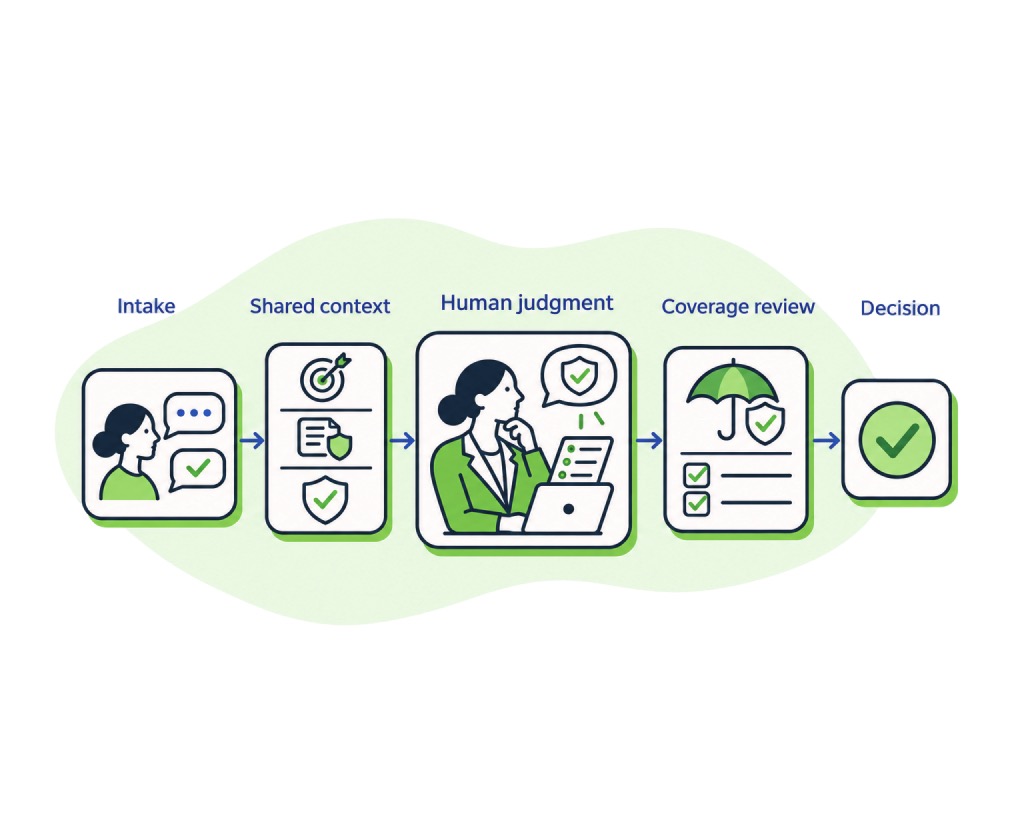
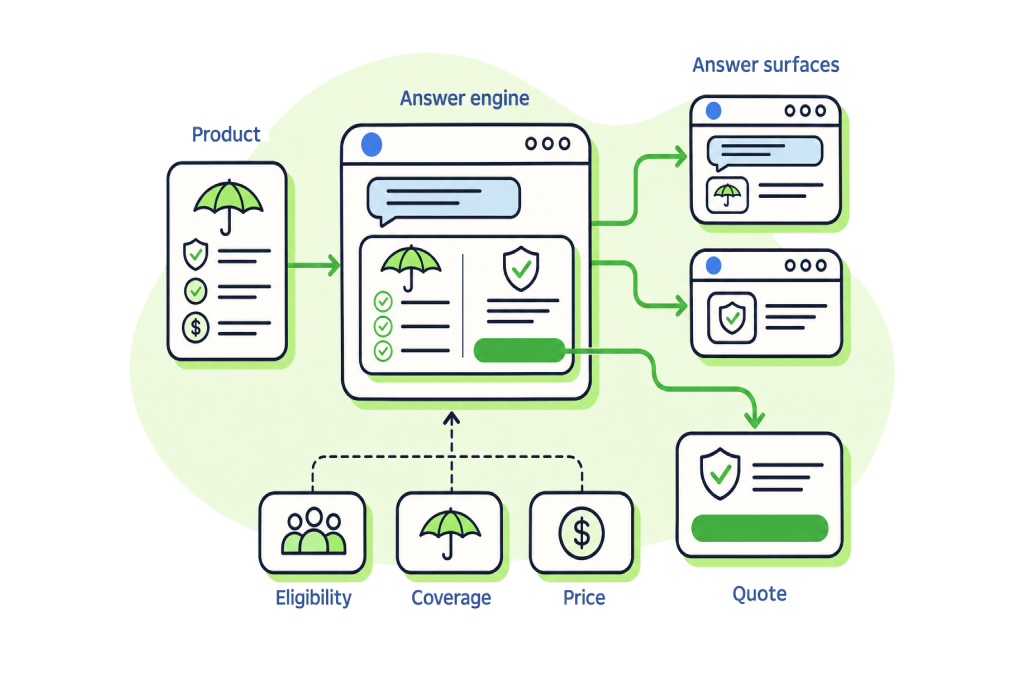
They are moving, buying a car, adding a driver, opening a business, or trying to work out whether the thing that just happened is covered. A generic insurance banner is not much help at that moment. A conversation that can clarify the situation and carry the answer into a compliant quote is more interesting.
This is the handoff we have been working on at Fletch. In October 2025, Insurance Innovation Reporter described Fletch’s transaction as the first known insurance policy purchase executed entirely by an agentic AI system in a controlled production environment. It included coverage choices, payment, and binding with consumer consent and licensed producer oversight.
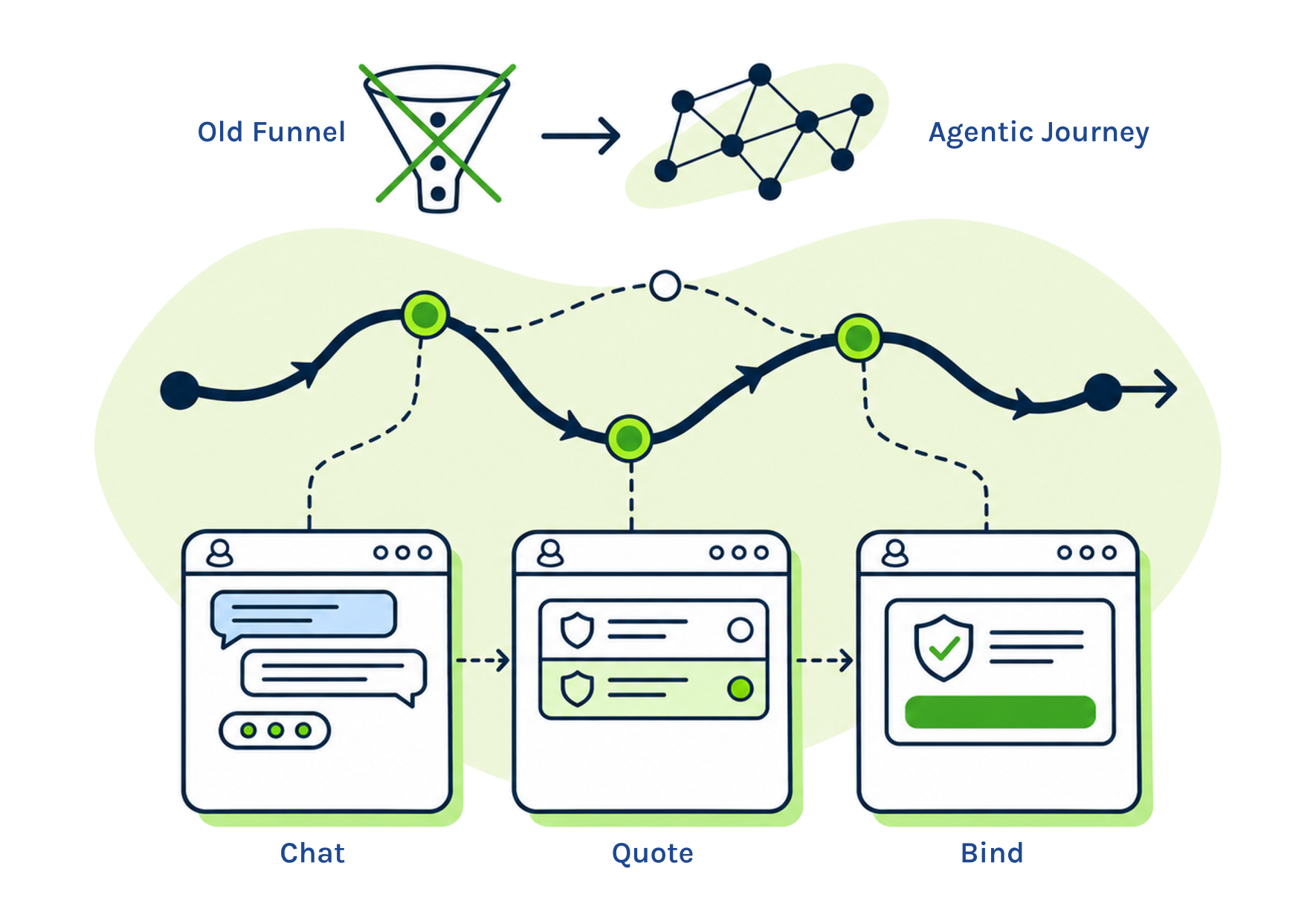
That does not mean every ad should end in an autonomous purchase. It does mean the ad, the conversation, the quote, the payment, and the human handoff do not have to be five disconnected projects.
A click is still useful. It tells you someone was interested enough to continue. But the useful part may start after the click now. The advertiser can learn what the customer is actually trying to do, and the customer can get somewhere without restarting the story.
The ad is no longer just trying to win the next three seconds. It is trying to earn the next question.
Sources
The links below are the external references used in this article. Fletch-specific claims are identified as first-party or trade-press sources.
- Reimagining advertising with AI - OpenAI; September 16, 2026
- Sponsored Agents in ChatGPT Ads - OpenAI Help Center; September 2026
- Angi Among First Brands to Pilot Sponsored Agents in ChatGPT - Angi; September 16, 2026
- Angi Launches the Angi App in ChatGPT - Angi; March 4, 2026
- Q1 2026 Shareholder Letter - Angi; 2026
- Fletch enables first agentic AI insurance policy purchase - Insurance Innovation Reporter; October 2025
- Agentic Commerce - Fletch; 2026